
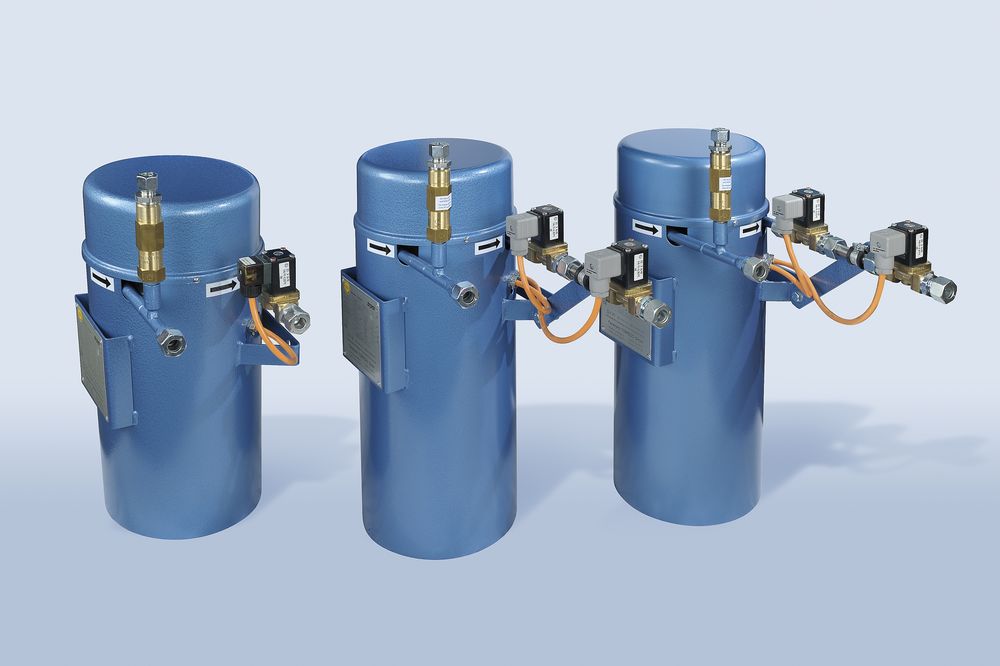
 Dry-type vaporizer
ET8TO
Aluminium core, electrically heated, compact
12–100 kg/h
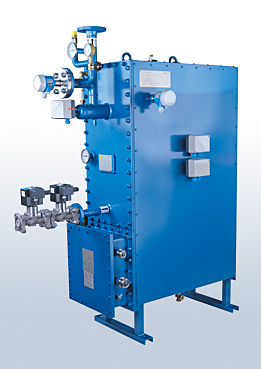 Wet-type vaporizer
ES
Water bath, electrically heated, cabinet design
60–1,400 kg/h
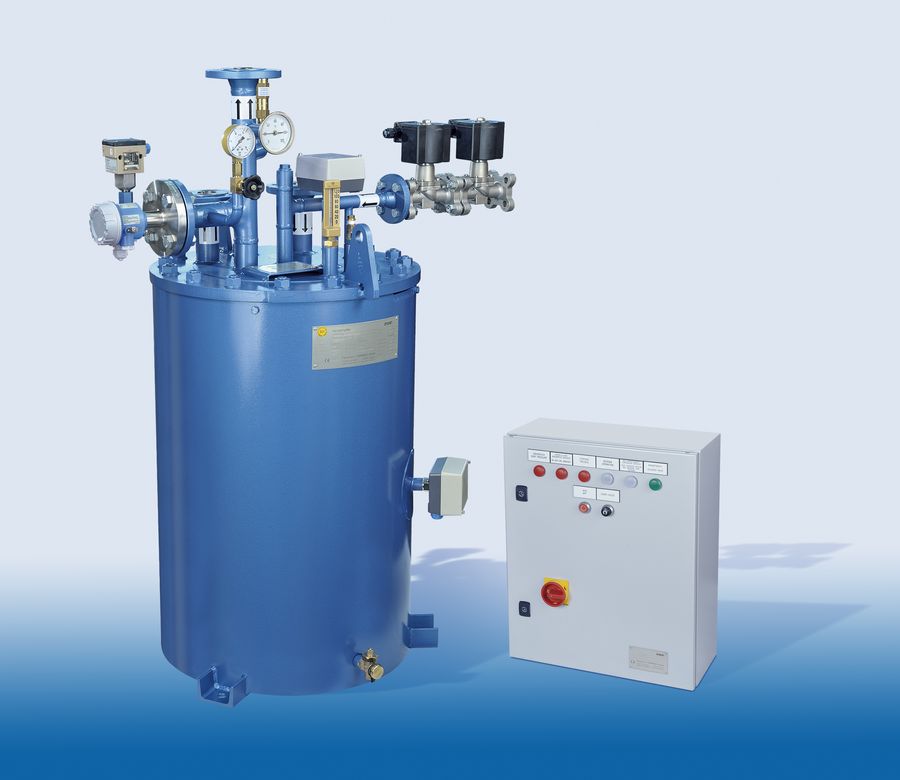 Hot-water vaporizer
WW
Heating water 90/70 °C, for large quantities
300–2,000 kg/h, special sizes up to 4,000 kg/h
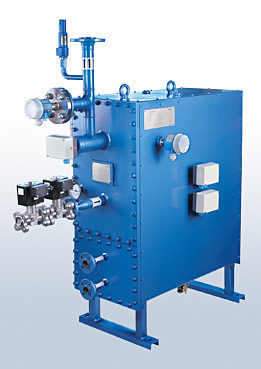 Steam-heated vaporizer
DS
For sites with a steam network
60–800 kg/h, special sizes up to 1,000 kg/h
All TORPEDO vaporizers for liquefied petroleum gas (LPG) are built in accordance with the Pressure Equipment Directive 2014/68/EU (PED) and the AD 2000 Code. Which design is right depends mainly on the quantity required and the energy available (which heating method is right for you?). On request, we also build them for operation with rDME.
Properties
| Formula | C₃H₈ (H₃C–CH₂–CH₃) |
|---|---|
| Molar mass | 44.10 g/mol |
| Boiling point (1.013 bar) | −42.1 °C |
| Critical temperature / critical pressure | 96.7 °C / 42.5 bar |
| Gas density | 2.01 kg/m³ (0 °C; 1.013 bar), around 1.5 times heavier than air |
| Liquid density | 0.581 kg/L at boiling point; 0.500 kg/L at 20 °C |
| Vapour pressure | 8.4 bar (absolute) at 20 °C |
| Enthalpy of vaporization ΔHv (at boiling point) | 426 kJ/kg (≈ 102 kcal/kg) = 18.8 kJ/mol |
| Standard enthalpy of formation ΔfH° (gas) | −104.7 kJ/mol |
| Net calorific value Hi / gross calorific value Hs | 12.87 kWh/kg (46.3 MJ/kg) / 13.98 kWh/kg (50.3 MJ/kg) |
| Auto-ignition temperature | 470 °C, temperature class T1, explosion group IIA |
| Explosive limits in air | 1.7–10.8 vol.% |
| German water hazard class (WGK) | not hazardous to water |
Commercial propane to DIN 51622 consists of at least 95 % by mass of propane and propene, with propane predominating. Propane and propene have almost the same boiling point (−42 °C and −48 °C respectively) and are therefore usually not separated. The remainder consists of small amounts of ethane, ethene, butanes and butenes. There are also propane/butane mixtures in various mixing ratios. The butane content lowers the vapour pressure curve, which can be desirable particularly at high outside temperatures. In freezing temperatures, however, pure butane and butane-rich mixtures have hardly any gauge pressure left: the LPG must then be conveyed to the vaporizer by a pump, for example, and the gas line must be protected against recondensation.
Around 60 % of LPG is obtained from the production of natural gas and crude oil; the rest is produced in refineries. Propane is odourless and only acquires its typical smell through odorization. It is not hazardous to water. Unlike heating oil tanks, LPG tanks therefore do not fall under the German Ordinance on Facilities for Handling Substances Hazardous to Water (AwSV). In the event of a release, note that propane gas is heavier than air and can accumulate at ground level, in pits and in basements. In future, LPG systems can also be operated with rDME blends if all components are suitable for this.
Planning notes
You will find the details we need to size your propane vaporizer in the planning notes.