
rDME-compatible on request
- Design
- Dry-type vaporizer, electrically heated
- Medium
- Propane / LPG, rDME on request
- Capacity
- 12–100 kg/h
- Shape
- cylindrical
- Pressure rating
- PN 25, test pressure 36 bar
- Controls
- integrated, no external control unit
- Explosion protection
- Zone 2
- Codes and standards
- PED 2014/68/EU, AD 2000-Merkblatt HP 801 No. 25
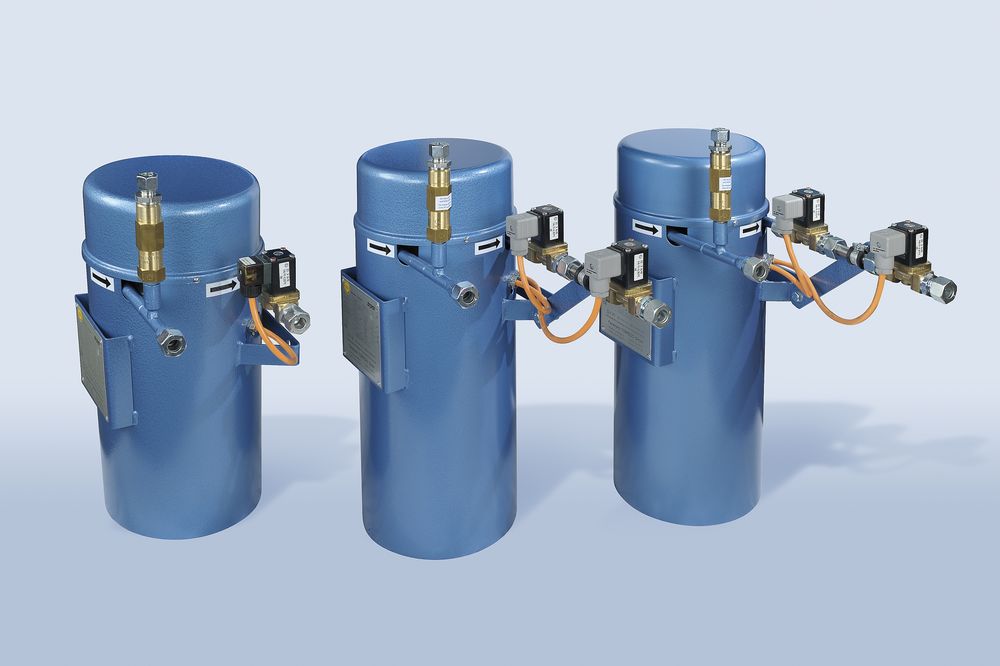
How it works
The dry-type vaporizer type ET8TO is indirectly electrically heated via a solid aluminium core. The heat transfer medium is heated and monitored under thermostat control within the safety-relevant limits.
Once the required vaporization temperature has been reached, the solenoid valves open. Liquefied petroleum gas (LPG) enters the vaporizer and is converted into the vapour phase there at unchanged pressure up to the stated rated capacity. Each of our units can be loaded up to the stated rated capacity. If gas demand rises, the core temperature falls and the thermostat switches the heating on. The aluminium core buffers short load peaks.
In the event of overload or power failure, the solenoid valves close. An additional safety temperature limiter monitors the aluminium core and prevents its temperature from rising to an impermissible level. The design and construction of the vaporizer ensure safe and fully automatic vaporizer operation, including within hazardous area Zone 2. The dry-type vaporizer does not need an external control unit.
Sizes
| Type | Rated capacity kg/h | Connected load kW | Voltage | Fuse rating | Unit weight approx. kg |
|---|---|---|---|---|---|
| ET8TO 12 | 12 | 2 | 230 V | 16 A | 27 |
| ET8TO 24 | 24 | 4 | 230 V | 25 A | 34 |
| ET8TO 32 | 32 | 6 | 400 V | 16 A | 34 |
| ET8TO 60 | 60 | 12 | 400 V | 25 A | 76 |
| ET8TO 100 | 100 | 18 | 400 V | 32 A | 105 |
The rated capacity applies at saturation conditions to propane, butane and rDME alike. All sizes 50 Hz, design temperature 120 °C.
Same design for ammonia (NH₃) Dry-type vaporizer ETA8TO · 5–30 kg/hTo size your vaporizer, we need some details about gas, storage and operation: Planning notes for propane / LPG →